Emergency Response and Safety Protocols During Major Smoke Incursions
The Instant Impact of Industrial and Aviation Disasters
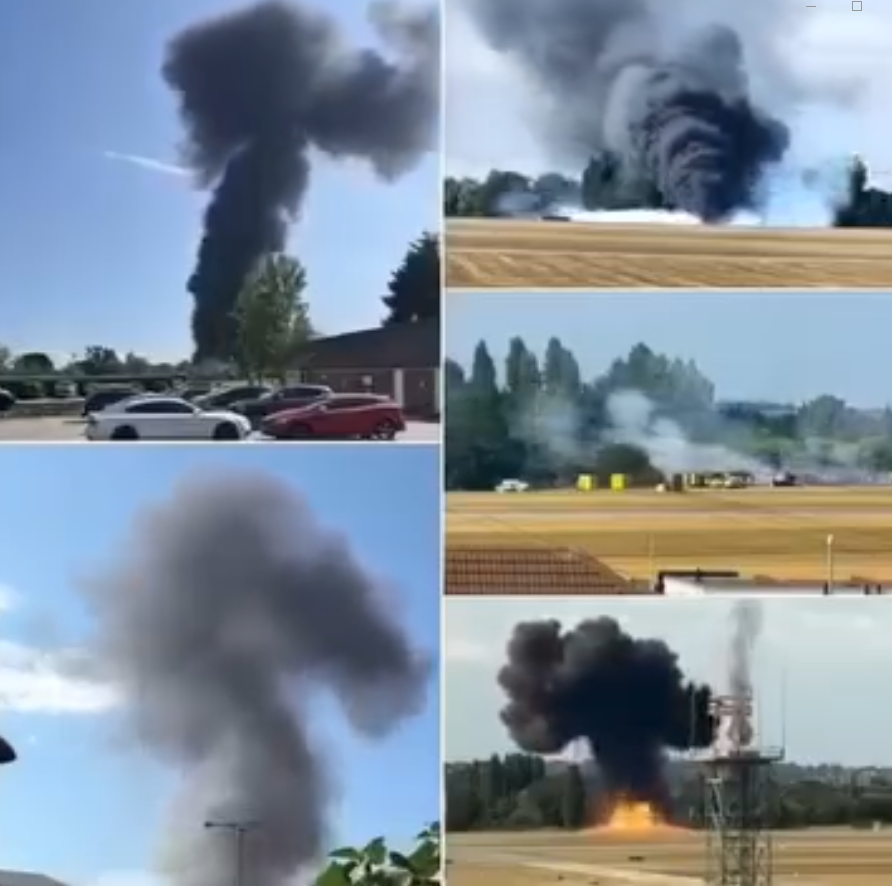
Emergency incidents involving massive fires require an immediate, coordinated response from local authorities and specialized rescue teams. Recent footage captures the terrifying moments a massive plume of dark smoke ascends into a clear blue sky. This intense smoke column indicates a highly volatile and severe combustion event occurring on the ground. The sheer volume of the thick black exhaust dominates the horizon, visible from several miles away. Nearby residential and commercial parking lots are blanketed under the shadow of the rising pollution. Such events highlight the extreme vulnerability of surrounding communities to sudden industrial or transport accidents.
Meanwhile, ground-level footage reveals the disaster unfolding across a vast, open airfield or flat terrain. Emergency sirens wail continuously in the background, signaling a high-alert situation for first responders. Specialized rescue vehicles and emergency trucks are seen rushing toward the heart of the conflagration. A bright orange fireball occasionally erupts at the base of the smoke trail, proving that the fire is still actively burning. The sudden onslaught of toxic vapors leaves ground crew and nearby residents with very little time to react. This combination of structural fire risk and airborne hazards represents a dual threat to public safety.
The Environmental and Operational Consequences of Severe Fires
The aftermath of these large-scale fires leaves behind a trail of immense environmental and operational devastation. Large plumes of carbon-rich smoke alter local air quality indexes within a matter of minutes. Surrounding fields and vegetation are put at risk of catching fire due to drifting sparks and intense heat. Local transport networks, including air traffic control and nearby roads, face immediate disruptions and closures. Businesses operating within the hazard zone are forced to evacuate, impacting daily productivity and economic stability. Repairing burned infrastructure and restoring contaminated soil requires years of expensive remediation efforts.
Beyond the financial toll, the human and operational impact of these events is profoundly distressing. Emergency response teams face hazardous conditions as they navigate through blinding smoke to suppress the flames. Access to clean air breathing apparatus becomes a strict necessity for everyone working on the perimeter. The emotional distress experienced by onlookers witnessing a sudden explosion can linger long after the fire is out. Nearby medical centers must prepare for an influx of patients suffering from smoke inhalation or stress-related symptoms. Rebuilding operational normalcy at an affected airfield demands immense cooperation among various regulatory agencies.
Mitigating Fire Risks Through Technology and Infrastructure
As the density of industrial and aviation hubs increases, governments must prioritize advanced mitigation strategies. Constructing robust fire containment zones and utilizing fire-retardant materials is crucial for modern facility safety. Urban and industrial planning must incorporate specialized drainage to handle hazardous chemical runoff from firefighting foam. Upgrading automated suppression systems is essential to extinguish localized flare-ups before they expand. Additionally, keeping vegetation cleared around high-risk perimeters can act as a natural barrier against spreading wildfires. Investing in resilient safety infrastructure today will save countless lives and critical assets tomorrow.
Technology also plays a pivotal role in modern crisis management and community preparedness. Implementing cutting-edge drone surveillance can provide commanders with vital thermal imaging during an ongoing blaze. Satellite monitoring and real-time gas sensors help environmental scientists track air pollution dispersion with greater accuracy. Public alert apps are necessary to inform surrounding communities about shifting wind directions carrying toxic smoke. International cooperation allows fire safety organizations to share best practices regarding hazardous material management. Ultimately, minimizing the damage of major incidents depends on a proactive combination of smart engineering and innovative warning networks.
Key Takeaways for Industrial and Fire Safety
- Immediate Evacuation: Always stay clear of downwind areas when large black smoke plumes are visible.
- Rapid Response: Emergency vehicles require clear, unblocked access routes to manage active airfields effectively.
- Air Quality Monitoring: Communities near major fire incidents must monitor atmospheric updates closely for safety.