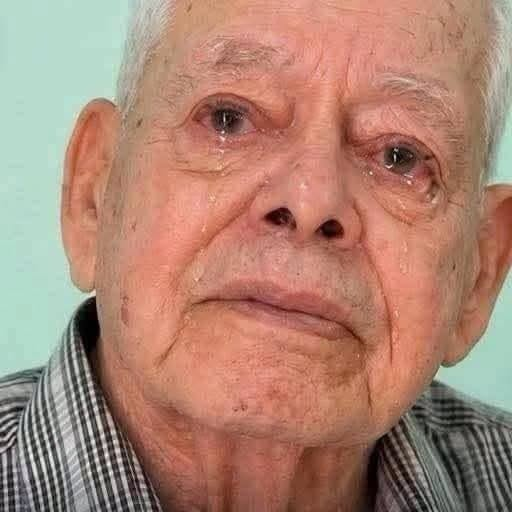
A 92-year-old man reportedly apologized to his daughters for his mistakes. We examine the origin of the story and the problem of loneliness in old age.
A story circulating on social media features an elderly man who breaks down in tears, admits that he “wasn’t the best father,” and asks his daughters not to abandon him during his final years.
The posts claim the man is 92 years old and would be willing to live in a nursing home rather than die completely alone. However, the content does not publicly identify his name, country, family, or the institution where he was allegedly filmed.
For this reason, it is not possible to independently verify all the details of the story. What is verifiable is that the post has been repeated on numerous Facebook and Instagram accounts, generating a debate about forgiveness, family wounds, and the loneliness of older adults.
What does the story circulating on social media say?
According to viral posts, the protagonist is a 92-year-old man who had become estranged from his daughters after a complicated family relationship.
The story attributes to him a direct request: he acknowledges that he wasn’t the best father, asks for forgiveness, and requests that they at least help him get into a senior living facility. Some versions add that he fears dying alone.
The message has been published with slightly different titles. Some pages say he asks “not to die alone”; others claim he requests to be taken to a nursing home, while some assert that he was never there for his daughters.
These discrepancies show that the story has been altered as it circulated. There is no complete interview, family statement, or institutional source that would allow for an accurate reconstruction of what happened.
Is the story confirmed?
Not completely.
The case appears mainly in social media posts and on sites that repeat the same headline, but do not provide names, location, original date, or verifiable documents.
One of the articles found uses the case as a starting point to talk about regret and loneliness, but it also does not identify the elderly person or provide a primary source.
This does not necessarily prove that the video is fake. It could be a real recording used out of context, a staged performance for social media, or the testimony of a person whose identity remains private.
The responsible conclusion is that the story went viral, but its personal details could not be independently verified.
Why the video generated mixed opinions
Many people reacted with compassion and asked that the daughters accompany the man. For them, his advanced age and remorse would be reason enough to attempt reconciliation.
Other users pointed out that it’s unknown what happened during the daughters’ childhood. They believe that a father’s aging doesn’t automatically erase the consequences of years of abandonment, neglect, violence, or emotional absence.
Both reactions stem from incomplete information. The public only knows part of the story and shouldn’t accuse the daughters or claim that the man deserves to be abandoned.
A damaged family relationship can include experiences that don’t appear in a short video. Forgiveness, contact, and living together are different decisions and don’t always happen at the same time.
Forgiveness does not obligate one to resume living together.
A person may recognize a parent’s remorse without feeling ready to live with them or immediately re-establish a close relationship.
It’s also possible to help in other ways: seeking social assistance, collaborating with medical care, arranging limited visits, or finding suitable accommodation. None of these options guarantees complete emotional reconciliation.
When there is a history of abuse, the safety and well-being of family members must be taken into account. Guilt should not be used to coerce a person into resuming a relationship they consider harmful.
At the same time, leaving an older adult without access to food, shelter, medical care, or protection can place them in a seriously vulnerable situation. The solution should seek professional and community support, not turn the conflict into a public trial.
Loneliness in older adults is a real problem
Although this case is not fully documented, loneliness and social isolation during old age do represent a public health problem.
The World Health Organization notes that social isolation and loneliness are important, yet frequently overlooked, social determinants of health. It also estimates that approximately one-quarter of older adults experience social isolation.
Social isolation refers to having few or no regular contacts or interactions. Loneliness is the painful feeling of lacking the connection or companionship one desires. A person can live alone without feeling lonely, while another can experience loneliness even surrounded by family.
Older adults may lose contacts due to the death of a partner or friends, mobility difficulties, hearing problems, chronic illnesses, retirement, or lack of transportation.
How can loneliness affect your health?
Persistent loneliness is not just an emotional experience. It has been linked to increased risks of depression, cognitive decline, cardiovascular disease, and other health problems.
The U.S. National Institute on Aging warns that loneliness and social isolation can affect the physical, mental, cognitive, and emotional health of older adults.
This does not mean that everyone who lives alone will develop an illness. The relationship depends on multiple factors, such as prior health, available support, the duration of isolation, and economic circumstances.
However, an older adult who stops eating, neglects their medication, shows constant sadness, or loses interest in their activities needs attention.
Signs that an older adult needs help
An older person may be experiencing isolation, depression, or difficulty caring for themselves when they exhibit changes such as:
- Stop answering calls or receiving visitors.
- Neglecting hygiene, food, or housing.
- Losing weight without explanation.
- Stopping important medications.
- To express that he has no reason to continue living.
- Show persistent sadness, irritability, or anxiety.
- To frequently get confused or lost in familiar places.
- Suffering repeated falls.
- Not being able to perform basic activities without help.
Depression should not be considered a normal part of aging. Isolation and loneliness are associated with an increased risk of depressive symptoms and require evaluation when they affect daily life.
If the person expresses intent to harm themselves, completely refuses essential food or medication, exhibits sudden confusion, or is in danger, emergency help should be sought.
What can a family do in the face of a difficult relationship?
The first step is to assess the senior’s actual needs. They may require medical care, help with shopping, medication supervision, financial assistance, or a safe place to live.
Next, it’s important to set clear boundaries. Helping doesn’t always mean taking the child to live with one of the children. The family can share responsibilities, ask for support from other relatives, or look into community services.
When there are old wounds, a conversation with a family therapist or mediator can prevent accusations and unrealistic expectations. The initial goal might be to address urgent needs before attempting to repair the entire relationship.
Regular phone calls, scheduled visits, community activities, and groups for older adults can reduce isolation. The National Institute on Aging also recommends staying in touch with family and friends, participating in meaningful activities, and seeking help for hearing, mobility, or health problems that make social interaction difficult.
Entering a care home does not always mean abandonment
A senior living facility may be appropriate when a person needs supervision, help with daily activities, or care that the family cannot safely provide.
The quality of these institutions varies. Before choosing one, it’s advisable to review their licenses, staff, cleanliness, medical protocols, food, activities, costs, and visiting policies.
Moving into a care home doesn’t automatically eliminate loneliness. Family involvement, visits, and frequent contact remain important when the relationship allows.
The goal should be to find a safe and suitable environment, not to use residential care as a punishment or present it as the only possible solution.
Common mistakes when reacting to similar stories
Immediately blame the children
The public is unaware of what happened within the family. A brief video does not reveal who caused the estrangement.
Turning repentance into an obligation
Apologizing is important, but the other person may need time, boundaries, or psychological support before responding.
Believing that living with someone solves everything
A person can feel ignored in a crowded house. The quality of relationships matters just as much as physical presence.
Sharing private data
Addresses, phone numbers, diagnoses, or identities of family members should not be disclosed without authorization.
Using pain to generate visits
Incomplete titles and images of a person crying can transform a vulnerable situation into entertainment.
Conclusion
The post about a 92-year-old man who admits he wasn’t the best father and asks not to die alone has been widely circulated, but there isn’t enough information to confirm all the details.
Their identity, location, and their daughters’ version of events are not publicly known. Therefore, it is wrong to judge the family or present the account as a completely verified story.
The case, whether real or used out of context, highlights a genuine problem: many older adults live with isolation, illness, and limited support. Addressing this reality requires social services, medical care, community networks, and family decisions that respect both the dignity of the older person and the boundaries of those who have been affected in the past.
Frequently Asked Questions
Is the video of the elderly man asking for forgiveness real?
The content is circulating on numerous accounts, but no primary source has been found to confirm their identity, location, and full family situation.
Is the man really 92 years old?
That’s the age mentioned in the viral posts. There is no public document or institutional source that allows us to verify it.
Are children obligated to forgive their parents?
Forgiveness is a personal decision. Practical help can exist without complete reconciliation or living together.
Does living in a nursing home mean that the family abandoned him?
Not necessarily. A care home can offer specialized care, but it should be chosen carefully and contact should be maintained whenever possible.
How can you tell if an older adult is suffering from loneliness?
They may isolate themselves, lose interest in activities, neglect their diet, express constant sadness, or stop communicating with other people.
What should you do if he says he wants to die?
This should be taken seriously. You must accompany the person, remove any potential means of harm, and immediately contact the emergency or mental health services available in your country.
Suggested internal links
- Signs of depression that should not be ignored in older adults
- How to choose a safe residence for a family member
- What to do when a parent-child relationship is broken
Recommended image
Main image idea: An elderly adult sitting by a window while conversing with a family member or social worker, without showing extreme suffering.
ALT text: Elderly adult accompanied during a conversation about loneliness, care and family reconciliation.
Use your own photograph or a professionally licensed commercial image from a stock photo service. Avoid reusing screenshots from the viral video without knowing their origin and authorization.
Editorial and liability notice
This article distinguishes between verifiable facts and claims circulating on social media. It does not identify or hold responsible family members whose version of events is not public. If signs of neglect, depression, cognitive decline, or risk of self-harm are observed, medical, social, or emergency help should be sought.