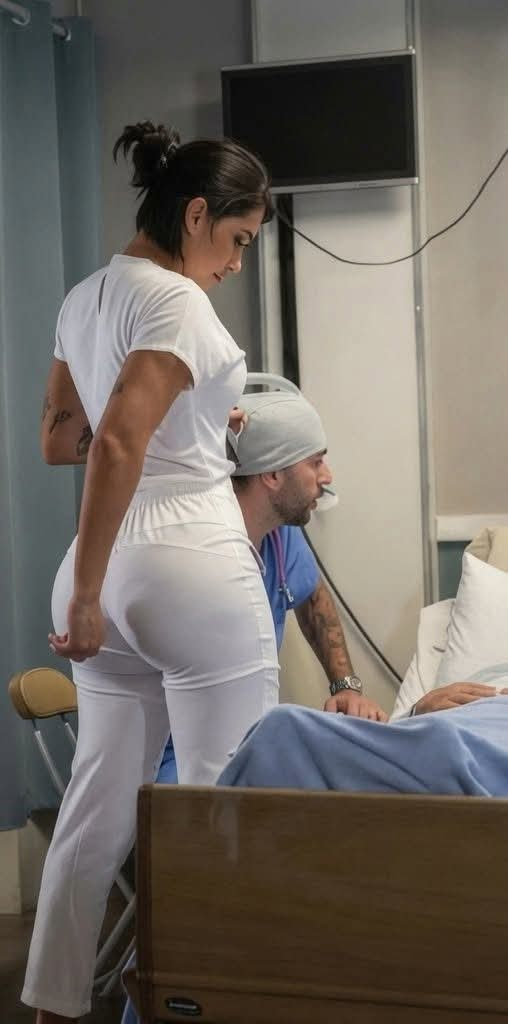
A leaked video allegedly showing a nurse and a patient has raised concerns. Find out what can be confirmed and how to protect medical privacy.
Posts circulating on social media claim that “a video of a nurse attending to her patient has been leaked.” The headline is usually accompanied by incomplete sentences, blurry images, or links promising to show the full recording.
The problem is that this description doesn’t identify the nurse, the patient, the hospital, the country, or the date of the alleged incident. It also doesn’t include an official statement confirming the video’s authenticity or that it depicts inappropriate behavior.
Without that information, it’s irresponsible to claim that a real incident occurred. The recording could show a routine medical procedure, a staged scene, old footage, or images used out of context.
Nursing staff perform tasks that can seem delicate when viewed out of context. These include assisting with hygiene, changing bandages, inserting catheters, administering medications, and assisting people with reduced mobility.
These activities are part of healthcare and should not be automatically interpreted as inappropriate behavior.
The World Health Organization states that respectful care must maintain the patient’s dignity, privacy, and confidentiality. It must also allow the person to understand what will be done and to participate in decisions related to their care.
A fragment recorded from a certain angle may seem strange if it does not show the preceding explanation, the complete procedure, and the patient’s clinical condition.
To evaluate a nurse’s performance, it is necessary to know if the procedure was indicated, if there was consent, if the protocols were respected, and if the person who recorded it had authorization.
A brief image doesn’t reveal what happened before or after. It also doesn’t show whether it was an emergency, if another professional was present, or if the patient needed immediate help.
The International Council of Nurses states that nurses must protect personal information and respect the privacy, confidentiality, and interests of those receiving care. Its standards also indicate that technology must be used in a manner compatible with the safety, dignity, and rights of individuals.
Therefore, a professional investigation should not be based solely on social media comments.
Accepting a medical procedure does not mean that the patient has authorized being recorded or that the images be published on the internet.
Consent for a recording must be clear and specific. The person needs to know what the material will be used for, who will be able to see it, and whether it will be published for educational, informational, or promotional purposes.
In the United States, HIPAA regulations protect medical records and other health information that can identify an individual. The Department of Health and Human Services explains that a facility covered by this law cannot allow media or filming equipment access to protected information without valid patient authorization.
Laws vary from country to country, but privacy and confidentiality are widely recognized principles in healthcare.
It is not necessary to clearly show the face to reveal a person’s identity.
A name spoken during the recording, a hospital bracelet, a room, a file number, a scar, a tattoo, or a conversation about the diagnosis can allow family members and acquaintances to identify the patient.
They can also reveal private information such as the voice, the date of admission, the hospital uniform, or a detailed description of the procedure.
Therefore, partially covering the face doesn’t always make a recording anonymous. The context may contain enough clues to identify the person.
Personal use of an account does not eliminate professional confidentiality obligations.
The UK Nursing and Midwifery Council’s guidance states that nurses and other professionals must use social media platforms such as WhatsApp, TikTok, Instagram, and Facebook responsibly. These obligations also apply to photographs, videos, audio recordings, and other digital communications.
Patient information should not be published simply because their name is not included. It is also unsafe to share it in a private group thinking it will never leave that group.
A screenshot, a download, or a forward can turn a limited post into viral content. Deleting it afterward doesn’t guarantee that all copies will disappear.
The video could have been recorded by a family member, another patient, a visitor, a worker, or a security camera.
In that case, it is still necessary to determine if there was authorization to film, how the file left the original environment, and who published it.
The leak may have occurred without the involvement of the nurse shown. Therefore, the professional should not be automatically accused of recording or disseminating the material.
It is also possible that a recording was made to document a legitimate concern. In that scenario, it should be submitted through the appropriate channels to the hospital, regulatory body, or authorities, avoiding widespread publication and exposing the patient.
The first step is to locate the original publication and check the date.
Next, it is advisable to check if the name of a hospital, health institution, or professional authority that has confirmed the case appears.
It should also be checked whether reliable media outlets have published matching information. When the only available content consists of copies of the same video with different titles, independent confirmation is still lacking.
Other elements that should be reviewed are the editing cuts, audio synchronization, uniforms, posters, and the language used.
A scene can come from a dramatization, a film, an educational campaign, or a video created specifically to generate interactions.
A common sign is that the text does not explain what type of care the patient received.
It’s also wise to be wary when they use expressions like “full video in the comments”, “watch before they delete it” or “nobody wants to talk about this”.
Other signs include the absence of date, location, original source, and statements from the medical center.
Using a blurry or cropped thumbnail can also create a misinterpretation. In some cases, the headline implies intimate or inappropriate conduct even though the content only shows a routine medical procedure.
Save evidence of the post, such as screenshots, links, account names, and dates.
Request that the platform remove the content due to the exposure of medical information or a breach of privacy. It is also advisable to contact the hospital administration or its patient services office.
When a legal infringement may exist, you can contact the data protection authority, the health regulatory body, or a lawyer in the relevant country.
In the United States, anyone can file a complaint with the Office for Civil Rights for possible violations of federal health privacy regulations.
It is not necessary to respond publicly with more medical details to demonstrate that the content violated privacy.
You shouldn’t forward the video to colleagues out of curiosity.
Report through internal channels related to privacy, security, nursing supervision, or regulatory compliance. Retain only the information necessary for the investigation without creating unnecessary new copies.
If the video shows potentially dangerous behavior, it must be formally reported. Professional guidelines recognize the obligation to raise concerns when there is a risk to a patient’s safety or well-being.
Reporting an incident does not mean posting it on social media. The investigation must protect the patient and allow everyone involved to explain what happened.
It is a mistake to believe that publicizing the information will automatically help the patient. Exposure can increase their harm and reveal medical information they wished to keep private.
Another mistake is accusing the nurse of abuse or inappropriate conduct without knowing the full procedure.
It is also incorrect to search for the patient’s identity, publish their name, or contact their family members.
Videos showing nudity, intimate procedures, or people in a vulnerable situation should not be downloaded or stored.
Even if a recording has already gone viral, sharing it again contributes to extending the potential violation.
A uniform does not confirm that the person is a certified nurse.
A private scene does not prove that misconduct occurred.
The patient may have authorized the procedure, but not necessarily the publication.
The nurse shown does not have to be the person who leaked the video.
A shared file is often not automatically authentic.
A short recording does not allow for an evaluation of all the care received.
Content removed from an account may continue to circulate on other pages.
The headline about a “leaked video of a nurse attending to her patient” does not provide enough information to confirm a specific case.
Nursing care may include personal procedures that, if viewed without explanation, are open to misinterpretation. At the same time, recording or disclosing images of a patient without authorization can violate their privacy, confidentiality, and dignity.
Before sharing a recording of this type, its origin, date, context, and authenticity must be verified. The patient’s identity must also be protected, and accusations against healthcare staff should be avoided without a proper investigation.
If there is a possible professional misconduct, the video should be reported to the medical center or the competent authority, not become viral entertainment.
Only when there is a legitimate purpose, appropriate authorization and compliance with the center’s rules and applicable legislation.
Not necessarily. Authorizing medical care does not equate to allowing the recording to be shared publicly.
Yes. The voice, the diagnosis, the room, a bracelet, a tattoo, or other details can reveal their identity.
Save evidence, request its deletion, inform the healthcare center and contact the relevant privacy authority.
Yes. It can increase the patient’s exposure, violate their privacy, and have employment, disciplinary, or legal consequences depending on the country.
It cannot be determined solely from a fragment. It is necessary to know the procedure, the clinical context, the consent, and the applicable protocols.
This article analyzes an incomplete viral headline and does not confirm the existence of a specific case. It does not identify or accuse any nurse, patient, or institution. Medical recordings must be handled with respect, consent, and privacy protection. Legal standards vary by country.